Utility
About UsConferencePartner With Us
  • Infrastructure
    Compliance
    Gas Control
    Grid
    Transmission and Distribution
  • Field Operations
    Utilities Field Service
    Utility Locating and Mapping
    Wastewater Treatment
  • Utility Intelligence
    Utilities AI
    Utilities Asset Management
    Utilities Billing
  • Leadership Perspectives
  • Innovation Insights
  • Research
  • News
  • Magazines
  • CXO Awards
THANK YOU FOR SUBSCRIBING

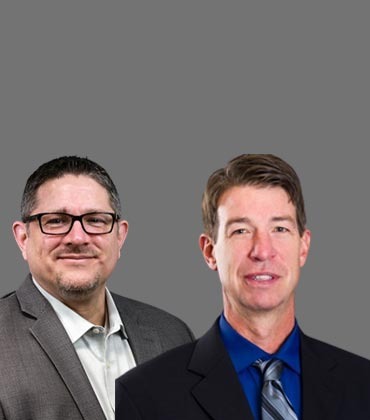
WesTech Engineering has been recognized by Utilities Tech Outlook Magazine as “Water and Wastewater Treatment Solutions Company of the Year 2026,” based on our proprietary methodology, reflecting its position in the industry, and is also named among “Top Wastewater Treatment Solutions,” reflecting its broader leadership. This profile has been developed by the Utilities Tech Outlook research and editorial team based on insights from an interview with Nathen Myers and Greg Payne, Business Development Managers.

WesTech Engineering
Complete Water and Wastewater Treatment Solutions

WesTech Engineering: Complete Water and Wastewater Treatment Solutions
Tweet

Nathen Myers and Greg Payne, WesTech Engineering | Utilities Tech Outlook | Water and Wastewater Treatment Solutions Company of the YearNathen Myers and Greg Payne, Business Development Managers
Awater treatment challenge does not always come with every question answered. A temporary capacity issue may reveal a long-term infrastructure need, just as testing may show that the water behaves differently than expected. The requirements can also shift as regulations, source conditions or plant demands change. Addressing those changing needs through multiple parties can require additional coordination, time and resources while creating more interfaces where costs can increase, schedules can be affected and coordination gaps can emerge.

WesTech Engineering cuts through this complexity as a full-service water and wastewater treatment provider. It brings process know-how, engineering expertise, technology, equipment, rental solutions, operations, and capital investment under one roof. WesTech integrates its capabilities with engineering and construction partners as part of a coordinated delivery approach, aligning responsibilities, decisions and execution across the project lifecycle.

“When we say integrated, we mean bringing every detail and need a client might have to coordinate through multiple parties under one umbrella,” says Nathen Myers, business development manager.

WesTech’s approach starts with understanding the water challenge and the operational, technical and commercial requirements surrounding it. From there, WesTech brings together the capabilities needed to support the right approach. Maintaining continuity from early development through implementation and operations, customers can adapt to changing conditions without having to repeatedly assemble and coordinate separate solutions.Clients from different markets, including municipalities, power, mining, oil and gas, chemical and semiconductor industries and data centers, can draw on individual capabilities or combine them into a delivery model suited to their project and procurement requirements.

Proof in Action

A small-town drinking-water project illustrates how those capabilities come together to address a specific need. The municipality’s 25-year-old plant lacked redundancy, and one of its filters required rehabilitation to extend its service life. But taking the filter offline for inspection and construction would disrupt the water supply to homes and businesses.


When we say integrated, we mean bringing every detail and need a client might have to coordinate through multiple parties under one umbrella.


WesTech supplied rental equipment that could treat water and feed it into the town’s distribution system while the existing filter was taken offline. The team handled the startup, and its electrical panel shop added the controls needed to connect the equipment to the existing plant system. It ran for several months while the work was completed.

WesTech’s water treatment experts also provided support during the inspection of old equipment. They assessed what could remain in service, what needed replacement and what improvements could be incorporated into the new design. The coordinated effort allowed the municipality to keep the water flowing during rehabilitation and plan a system to take it into the future.

What if Needs Change?

Flexibility is central to how WesTech serves its customers. Rehabilitation projects can span three to five years, during which parts of a plant may remain in operation while other sections are being installed or upgraded. Treatment requirements can also shift as each phase progresses. Customers may not know at the outset how much treatment capacity they will end up needing, or what changing needs they will encounter along the way.

WesTech’s rental capabilities provide flexibility when treatment needs emerge ahead of permanent infrastructure or when conditions are still evolving. Temporary systems can support construction, bridge transitions, address unforeseen treatment needs or provide capacity while a longer-term solution is developed. Because these systems can often be deployed six to 18 months faster than equipment developed for a permanent installation, customers can address immediate needs without waiting for the final infrastructure to be in place or committing prematurely to a permanent solution.Temporary needs can also appear with seasonal demands or an unexpected operating condition. WesTech gives customers the capacity when they need it, for as long as they need it, without having to make a permanent equipment commitment.

Building Expertise Around Emerging Needs

The growth of data centers and other emerging industries is creating new requirements, and WesTech’s broad expertise covers these applications. Their process expertise and industry relationships give customers access to teams that understand the demands of specific applications.

Different markets have different factors shaping their treatment needs. A project may be shaped by regulation, limited water availability, reuse requirements, timing or the need for redundancy. Customers can draw on the capabilities that match those needs, whether the requirement calls for WesTech’s equipment and expertise or additional capabilities through partners.
Power-plant projects provide an example of how those capabilities can be combined. Some projects have used components from WesTech alongside components supplied by industry partners to develop the perfect fit for project requirements.

Testing Before Scaling

Water treatment decisions depend on more than understanding what is present in the water. They also require understanding how that water will respond to treatment. Laboratory testing helps establish that foundation by validating water characteristics, evaluating treatment approaches, and identifying potential challenges before they become larger issues in design or operation. This allows treatment strategies to be developed around actual performance rather than assumptions and provides a way to evaluate changing conditions, new applications and contaminants that may not be addressed through conventional approaches alone.
  • You’ve got to be flexible because every market sector and client has different needs.


That need for testing is especially important as emerging contaminants demand new solutions. For example, selenium is a contaminant present in explosives and mine water applications that can affect humans and aquatic life. WesTech developed an electro-bioreactor and combined it with an ultra-filtration membrane system to effectively remove it.

For emerging contaminants and new regulations, WesTech uses proof-of-concept testing before customers commit to major capital investments. The company invested in bench scale pilots for in-house testing and skid-mounted pilot systems that can be deployed to customer sites to test treatment performance before a full-scale facility is built.

A full-service laboratory in Salt Lake City supports the evaluation by testing customer water samples. WesTech can also synthesize water in the laboratory when a customer has a predicted water analysis, but doesn’t have access to representative water samples. Synthesized water can help identify additional treatment requirements.

“You’ve got to be flexible because every market sector and client has different needs,” says Greg Payne, business development manager. “We strive to discover these needs and match them with our core capabilities.”

Opening New Paths for Water Reuse

WesTech sees increasing interest in water reuse in the municipal market, especially in the U.S., where less than 10 percent of wastewater effluent is reused, compared with more than 50 percent in many other countries. WesTech’s established capabilities in membranes, reverse osmosis and complete treatment systems position the company to help communities turn a reliable wastewater stream into a source of usable water.

The need to seriously look at water reuse becomes more pressing as climate change increases the severity of droughts, wildfires storms and flooding, all of which affect continued availability of existing water sources. Treated wastewater can serve applications ranging from irrigation at golf courses and parks to indirect or direct potable reuse. WesTech can treat effluent to the level required for each application, giving communities another reliable water source.

For industrial customers, management involves both the water entering a facility and the discharge. WesTech works across a range of water sources and treatment requirements, helping industrial facilities evaluate how different sources can support their operations. This flexibility can expand available water options, reduce reliance on a single source and allow treatment strategies to adapt as water availability, quality or operational requirements change. Treatment can be tailored to the required discharge quality, helping customers address current regulatory requirements and prepare for changing ones.

High-TDS streams add another opportunity for water recovery. Industrial customers are taking a more proactive view of these streams and considering how they can be converted into water for reuse within the plant. Desalination can support that shift, extending water recovery beyond drinking-water applications to serve another purpose inside a facility.

Water reuse, source flexibility and changing discharge requirements all point to the same need; customers need options as water conditions and treatment demands evolve. WesTech’s breadth lets customers test, treat, mobilize and adapt solutions as those needs take shape, earning it recognition as the Water and Wastewater Treatment Solutions Company of the Year 2026.
Water and Wastewater Treatment Solutions Company of the Year 2026

Company
WesTech Engineering

Management
Nathen Myers and Greg Payne, Business Development Managers

Description
WesTech Engineering provides water and wastewater treatment solutions for municipal and industrial customers. Its capabilities span treatment technologies, engineering, rental equipment, operations, laboratory testing, piloting, financing and aftermarket support. WesTech brings these capabilities together to help customers address changing treatment requirements, project timelines, water sources and regulatory needs.

I agree We use cookies on this website to enhance your user experience. By clicking any link on this page you are giving your consent for us to set cookies. More info

Utilities Tech Outlook
Follow on LinkedIn

About

  • Home
  • About Us
  • Partner With Us

Stay Connected

  • Subscribe
  • Newsletter
  • Sitemap

Contact Us

  • editor@utilitiestechoutlook.com
  • sales@utilitiestechoutlook.com
  • marketing@utilitiestechoutlook.com

Legal

  • Editorial Policy
  • Privacy Policy
  • Terms of Use

© 2026 Utilities Tech Outlook. All rights reserved.

This content is copyright protected

However, if you would like to share the information in this article, you may use the link below:

www.utilitiestechoutlook.com/westech-engineering-2026