Utilities Tech Outlook Weekly Brief
Be first to read the latest tech news, Industry Leader's Insights, and CIO interviews of medium and large enterprises exclusively from Utilities Tech Outlook
 That capability has become increasingly critical as transmission networks are pushed to deliver greater capacity and reliability under tighter environmental, safety and regulatory constraints. Utilities are expected to extend the service life of assets designed for earlier grid conditions, while maintaining predictable performance across decades-long lifecycles.
This creates a practical path for utilities to modernize incrementally as they transition toward digitally enabled grid architectures.
We don’t just replace legacy equipment. We future-proof the grid with technology we invented ourselves.
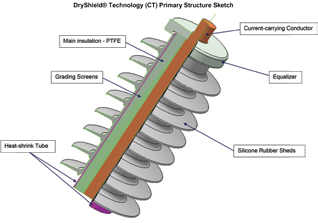
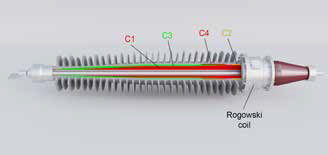 RHM applies the same dry insulation architecture across instrument transformers, bushings and cable terminations, forming a unified interface system. While each plays a critical role in grid operation, bushings have historically been among the most failure-prone elements in high-voltage systems. They are a central focus of RHM’s solution portfolio.
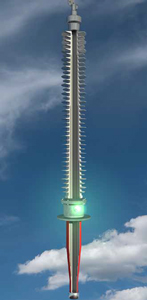 The interface strategy extends into digital applications. RHM’s digital variants replace analog outputs with digital signals, enabling interface equipment on transmission networks to connect directly with modern protection and monitoring systems and support more precise grid oversight. As utilities transition toward digitally managed transmission networks, these digital outputs improve system visibility and support more predictive grid operation.
 A flat organizational structure keeps decision-making close to engineering and manufacturing teams. Initial technical and commercial inquiries are typically acknowledged within 24 hours. Specifications are then reviewed directly with the customer, followed by a complete technical, design and shipping quotation, usually delivered within a week to 10 days. Once a purchase order is received, production begins immediately. Responsiveness is embedded as a company-wide operating principle.
What Do High Voltage Power Grid Equipment Manufacturers Help Utilities Modernize?
High Voltage Power Grid Equipment Manufacturers help utilities upgrade the interface points that connect transmission assets, substations and monitoring systems. These components affect reliability, safety, maintenance planning and long-term grid performance. In aging networks, the category is especially important because older interface assets may depend on fluid or gas insulation, limited replacement options or designs built for earlier operating conditions. The result is a practical focus on assets that must perform for decades while supporting higher capacity, tighter oversight and safer field execution.
How Does RHM International Apply Dry Insulation to Grid Interfaces?
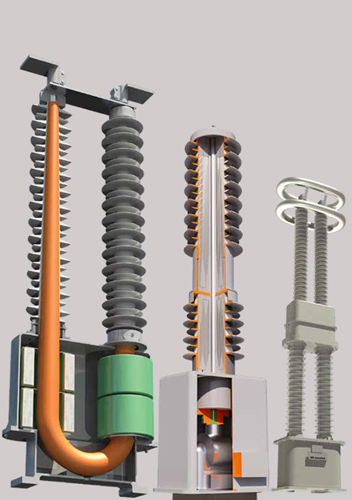
Among High Voltage Power Grid Equipment Manufacturers, RHM International focuses on dry-insulated high-voltage equipment that replaces oil- and SF6-based technology. It designs and manufactures bushings, instrument transformers, cable terminations and digital systems built around a proprietary dry-type insulation architecture. The approach removes pressurization, combustion and fluid-related failure concerns while supporting modernization within existing substations. RHM International also applies the same insulation platform across multiple interface products, giving utilities a more consistent path for phased upgrades.
Why Are Dry-Type Components Important for Reliability and Safety?
High Voltage Power Grid Equipment Manufacturers use dry-type designs to reduce dependence on insulating media that can leak, degrade or require routine servicing. Dry insulation can make asset aging more predictable, helping teams plan maintenance before sudden failures affect adjacent equipment or crew safety. It also supports environmental and regulatory goals when utilities are reducing exposure to SF6 and oil-filled components. For long-life infrastructure, that predictability can improve outage planning, spare strategy and confidence in critical substation interfaces.
What Should Buyers Evaluate in High Voltage Power Grid Equipment Manufacturers?
Buyers should examine engineering fit, lifecycle behavior, lead times, installation requirements and support documentation. High Voltage Power Grid Equipment Manufacturers are most useful when products can match existing electrical and physical constraints without forcing a full substation redesign. Custom design capability also matters when legacy equipment is obsolete, drawings are old or original manufacturers are no longer available. Evaluation should include how quickly specifications are reviewed, how installation uncertainty is reduced and whether documentation is developed alongside the equipment.
What Makes RHM International Relevant for Custom Replacement Projects?
RHM International illustrates how High Voltage Power Grid Equipment Manufacturers can support legacy replacement work at scale. It engineers dry-type replacements from original OEM drawings, reviews designs against envelope and electrical requirements and validates them with customers before production. The company has developed more than 3,000 distinct bushing designs and operates two manufacturing facilities in China with key components made in-house. Its profile also highlights typical shipments of dry-type interface equipment within 16 to 18 weeks, a meaningful factor when failures threaten service continuity.
How Do These Manufacturers Support Digital Grid Development?
High Voltage Power Grid Equipment Manufacturers increasingly support digital transmission networks by connecting interface assets with protection, monitoring and control systems. Digital variants can replace analog outputs with digital signals, improve visibility and enable more predictive oversight. In some applications, multiple functions can be consolidated within a single interface asset, reducing equipment count and helping substations manage space and complexity. This role becomes more important as utilities modernize without interrupting operations or rebuilding every site at once.
Management
Eric Euvrard, Founder and President
Description
RHM International designs and manufactures dry-insulated high-voltage equipment that replaces oil- and SF₆-based technology. Its custom-engineered bushings, instrument transformers and digital systems allow utilities to modernize aging grids safely and quickly. They eliminate fluid-related risk while maintaining uptime under increasingly constrained regulatory and supply conditions.