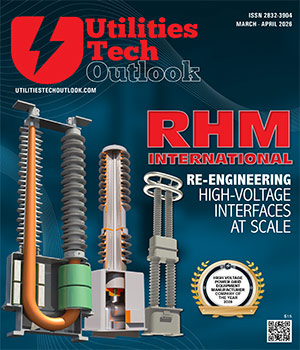
RHM International eliminates failure points at the high-voltage grid interface, enabling utilities to modernize aging infrastructure without increasing operational exposure. Why are high-voltage grid interfaces increasingly critical for utilities? That capability has become increasingly critical as transmission networks are pushed to deliver greater capacity and reliability under tighter environmental, safety and regulatory constraints. Utilities are expected to extend the service life of assets designed for earlier grid conditions, while maintaining predictable performance across decades-long lifecycles. A persistent source of risk lies at the interface layer. Engineered for traditional grid environments, interface components have historically relied on oil- and SF₆-based insulation. Over time, these media introduce leakage, insulation degradation and maintenance exposure, increasing failure probability and complicating asset management. Growing restrictions on SF₆ under international environmental frameworks further elevate compliance and replacement risk in an already failure-prone category. RHM International re-engineered the interface layer of the high-voltage power grid. The family-owned specialist innovation company replaced oil- and gas-based insulation with a proprietary dry-type medium that operates without pressurization, combustion risk or routine servicing. Developed entirely in-house, the insulation system eliminates explosion risk and fluid-related failure modes while reducing long-term maintenance requirements within existing substations. “When interface assets behave as predictable, long-life infrastructure rather than high-risk failure points, the entire grid becomes easier to manage,” says Eric Euvrard, founder and president. This creates a practical path for utilities to modernize incrementally as they transition toward digitally enabled grid architectures.
Carbon Footprint Management

Todd Hranicka, Director - Energy Services, Public Service Electric & Gas Company
Transmission and Distribution

Eric T. Belle, VP Engineering and Standards, NiSource, and Jonathan DeVries, VP of Strategy and Risk
Wastewater Treatment
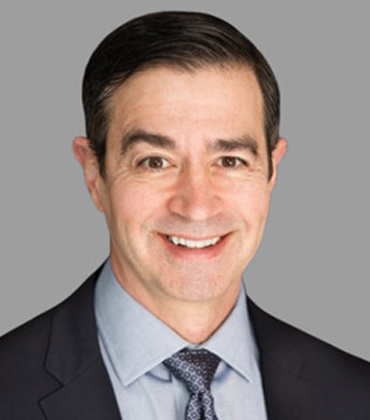
Julian Kaufmann, Executive Vice President, CAMS
Compliance

Sophie James, Vice President, Water Quality & Environmental Affairs, California Water Service
Grid

Marcus Johansson, Senior Executive - Wildfire Mitigation, Digital Transformation, Grid Modernization
Grid

Vasileios Geroulas, Director of Digital Transformation, DTE Energy
Grid

Jeremy Angelle, VP of Well Construction, Expro

Utilities Asset Management
Frode Jensen, President Rig Technologies, National Oilwell Varco

Wastewater Treatment
Chris Shelton, AES Senior Vice President | Chief Product Officer | President, AES Next, The AES Corporation
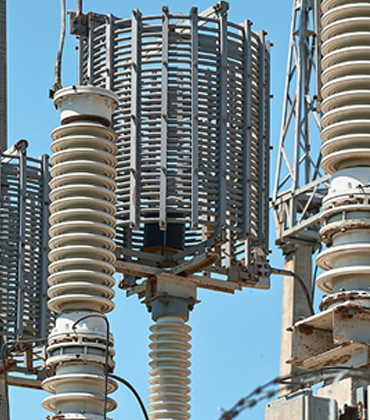
High voltage equipment manufacturing provides the essential infrastructure and intelligence required for efficient, reliable global power distribution.

High-voltage manufacturing increases equipment lifespan, maintains high-quality standards and ensures reliable performance.
Reliability Reimagined Across Power and Utilities
This edition examines the infrastructure decisions redefining power and utility networks at this pivotal moment. Our cover feature spotlights RHM International, recognized as the Top High Voltage Power Grid Equipment Manufacturer Company of the Year 2026, for re-engineering the high-voltage interface layer. By replacing oil and SF₆ insulation with a proprietary dry-type medium, the company has eliminated leakage, degradation, and combustion risk from critical components.
With more than 24,000 RIF bushings and 23,000 HV DryShield current transformers installed worldwide, and an exceptionally low failure rate, RHM demonstrates that interface assets can perform as long-life infrastructure rather than recurring maintenance liabilities. Its ability to deliver dry-type replacements within 16 to 18 weeks offers utilities a pragmatic path to modernization.
Beyond the cover story, we highlight organizations advancing operational rigor across adjacent sectors, from energy market risk management to proactive water quality compliance. In CXO Insights, Julian Kaufmann of CAMS underscores the value of disciplined origination and regulatory intelligence, while Sophie James of California Water Service outlines a forward-looking lead testing strategy.
Collectively, these leaders show that modernization is not a single upgrade, but a sustained commitment to engineering discipline, regulatory foresight, and measurable execution.