Utility
About UsConferencePartner With Us
  • Infrastructure
    Compliance
    Gas Control
    Grid
    Transmission and Distribution
  • Field Operations
    Utilities Field Service
    Utility Locating and Mapping
    Wastewater Treatment
  • Utility Intelligence
    Utilities AI
    Utilities Asset Management
    Utilities Billing
  • Leadership Perspectives
  • Innovation Insights
  • Research
  • News
  • Magazines
  • CXO Awards
THANK YOU FOR SUBSCRIBING

Bobcat Power has been recognized by Utilities Tech Outlook Magazine as “Top Turnkey Substation and Transmission Solutions 2026,” based on our proprietary methodology, reflecting its position in the industry, and is also named among “Top Transmission and Distribution Solutions,” reflecting its broader leadership. This profile has been developed by the Utilities Tech Outlook research and editorial team based on insights from an interview with Bryan Erwin, Chief Safety Officer.

Bobcat Power
Building Grid Capacity Beside Live Equipment

Bobcat Power: Building Grid Capacity Beside Live Equipment
Tweet

Bryan Erwin, Bobcat Power | Utilities Tech Outlook | Top Turnkey Substation and Transmission SolutionsBryan Erwin, Chief Safety Officer
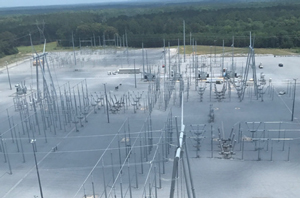
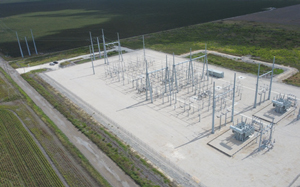
Bobcat Power does much of its work where the grid cannot simply be switched off. The turnkey substation contractor helps utilities add capacity at sites that are already active, building new foundations, steel and equipment beside infrastructure that may remain energized and continue serving customers. Few construction environments are less forgiving. Space is usually tight, and each phase of work depends on the one before it. Add live equipment only feet away, and planning has to begin well before the first shovel hits the ground.

Bobcat Power’s answer is an integrated execution model. When awarded all three scopes, its crews coordinate site preparation, below-grade construction and above-grade installation under one plan, from initial site development through foundations, grounding systems, structural steel and electrical equipment. Sequencing the work as a whole lets the company manage dependencies between phases and build safety controls around existing equipment into the schedule itself.

Holding it all together is a zero-harm philosophy. Safety performance is the first thing utility customers look for in a contractor, and Bobcat Power identifies high-energy hazards and establishes appropriate controls before any work begins. Speed matters on these projects, but for Bobcat Power, coordinating construction efficiently must never come at the expense of the people doing the work.

“Everyone goes home every day with life, limbs, and livelihood intact,” says Bryan Erwin, Chief Safety Officer.

Where the Margin for Error Is Thin

Expanding an operating substation is a different discipline from building “greenfield” on open ground. Equipment a few feet away may stay energized for the life of the project, so Bobcat Power approaches every such job with a “brownfield” safety mindset and treats the surrounding infrastructure with deliberate caution.

The company works through a strict hierarchy of controls when encountering high energy hazards. Erwin states that, “eliminating a hazard, when possible, is always considered first. Building capacity to absorb an unexpected release of energy is the first control considered when elimination of the hazard is not possible. When building capacity to safely absorb a release of high energy is not attainable, then creating space or distance from the known hazard must be implemented.” Every crew understands the risks attached to its assignment and the controls required before it starts.

Minimum approach distances (MAD) drive much of the planning. Any activity that could encroach on the MAD requires an outage, an electrically safe working condition and a proper grounding plan, all in place before work proceeds. Grounding arrangements and equipotential zone bonding are designed around the specific site and the equipment beside it. Outage windows become part of the construction sequence itself, shaping when and where each piece of work can safely happen.

Tight sites add another layer of complexity. Site access, material deliveries and the movement of crews and equipment all have to be planned around assets the utility still needs in service. Bobcat Power coordinates schedules, access and installation requirements across every scope so that progress in one corner of the yard never compromises clearances or outage plans in another, and the station keeps doing its job while new capacity takes shape around it.

Three Scopes, One Plan

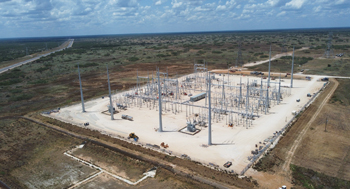
Bobcat Power’s model rests on three divisions. Site crews prepare the ground, including site roads and stormwater infrastructure. Below-grade teams install concrete and drilled-pier foundations, conduit, ground grids and other buried systems, backed by in-house drilling and hydro-vac excavation that enables crews to non-destructively excavate or explore for underground utilities prior to conventional, mechanical digging. Above-grade crews erect structural steel and install electrical equipment, control cables and power cables.

Not every contract covers all three scopes, but when it does, coordination tends to run smoothly, and on a live site the payoff goes well beyond efficiency. One contractor managing every phase can plan ground grid tie-ins, conduit routes and equipment placement with existing infrastructure and outage windows already in view. Fewer handoffs mean fewer places where assumptions about energized equipment can slip through the cracks.

Breadth also pays off when a site throws up surprises. An unexpected ground condition or installation conflict can touch several scopes at once, and Bobcat Power’s field teams can judge how a change ripples into adjacent work before settling on a practical fix. Safety, field production and the quality of the finished station are the three measures the company holds itself to.

Bobcat Power has carried that standard onto projects for utilities including American Electric Power, Entergy and LCRA. No two jobs share the same design, construction requirements or site conditions, and the ability to adapt to each one while keeping every scope aligned is much of why utilities return to the company.
Built for the Day the Station Goes Live

A substation is ultimately judged by how smoothly it can be tested and energized, and Bobcat Power plans backward from that moment. Civil, below-grade, above-grade and control activities are organized as interconnected work packages. A decision about grounding, conduit routing, foundations or control-building interfaces made in the first weeks can affect cable pulling, terminations and testing months later, so the company resolves those requirements early with engineering teams, equipment manufacturers and utility owners. Constructability reviews, detailed installation records, interface verification and disciplined change management help deliver a complete, documented facility ready for systematic commissioning.
  • Everyone goes home every day with life, limbs, and livelihood intact.


Equipment choice raises the stakes further. Gas-insulated substations (GIS) fit into compact footprints, making them a natural fit for constrained sites, but they come with tighter tolerances, specialized equipment, strict cleanliness requirements and close dependence on manufacturer installation procedures. Air-insulated substations (AIS) offer more room to work, yet their increasingly sophisticated protection systems, digital communications, SCADA, automation and intelligent electronic devices demand careful coordination between construction crews and control-system installation.

The People Problem

Bobcat Power works across West, South, East and North Texas, as well as Louisiana, Arkansas and Mississippi, where soils and terrain vary widely and shape foundation design. Geotechnical reports guide bidding and foundation planning, while operations leaders bring firsthand knowledge of how ground behaves in each region, with site-specific findings always taking precedence.

The tougher challenge is finding people to do the work. Substation construction can mean traveling hundreds of miles from home, working outdoors in punishing conditions and spending long stretches away from family. Recruiting and retaining qualified crews has become one of the industry’s defining problems.

“What is changing is our ability to recruit and retain the workforce to go perform the work,” says Erwin.

Bobcat Power’s response is to look after its people financially, emotionally, mentally and spiritually. Keeping experienced crews together also protects something harder to replace, the field knowledge that safe, consistent execution depends on as teams move between projects across a wide geography.

A Bigger Platform Behind the Work

In March 2025, Bobcat Power was acquired by Asplundh, an organization whose reach extends from vegetation management and right-of-way clearing to an infrastructure group that performs transmission, substation and distribution construction. “Asplundh is a leading provider of vegetation management and infrastructure services to the utility market, which is the driving force behind the One Asplundh approach of finding a better way to provide safe and effective services to customers,” says Erwin.

Within the group, responsibilities stay sharply defined. Bobcat Power remains focused on turnkey substation construction, while sister company ULCS brings specialized transmission capabilities, including tower and monopole erection, wire stringing and complex terminations. Together, they can support larger grid programs while each company leads in its own specialty.

With that backing, Bobcat Power plans to grow its existing divisions and expand across the South and Southeast. The strategy is about doing more of what the company already does well, in more places, rather than reinventing its core scope. As demand for new substation capacity rises, the combination of focused expertise and group-level resources positions Bobcat Power to take on more of that work.

Recognition Earned in the Field

Utilities are under pressure to add capacity without interrupting the service customers depend on. Meeting that demand takes contractors who can build safely beside live equipment, coordinate every phase of construction and hand over stations ready for energization.

Bobcat Power brings those capabilities together through a zero-harm culture, an integrated three-scope model and planning that looks ahead to commissioning from the first day. Its recognition as Top Turnkey Substation and Transmission Solutions 2026 reflects that combination, along with the strength of a wider infrastructure group helping utilities expand the grid around the systems already in service.

Deep Dive

What Turnkey Substation Delivery Must Control

Substation expansion is becoming harder to separate from the conditions surrounding the existing grid. Utilities may be building new capacity beside energized infrastructure, extending facilities into undeveloped areas or integrating more sophisticated protection and control systems into established sites. That mix raises the cost of poor coordination. A contractor that handles only one portion of the work may complete its scope correctly while still creating conflicts for the crews that follow. Scope integration therefore deserves close scrutiny. Civil preparation, below-grade construction and above-grade installation affect one another directly, particularly where foundations, grounding, conduit routes and cable paths converge. Coordination becomes more difficult when those packages are split among multiple contractors with separate schedules and field assumptions. Buyers should examine whether a provider can carry work across connected construction phases and whether it has the internal equipment and crews to support specialized tasks without creating unnecessary handoffs. Responsibility also becomes easier to trace when fewer parties control interdependent scopes, reducing disputes over sequencing and corrective work. Workforce continuity matters here because shortages of qualified field personnel can disrupt schedules even when engineering and equipment are ready. Safety discipline is equally consequential because substation construction frequently occurs near energized equipment. Minimum approach distances, planned outages, grounding procedures and electrically safe working conditions cannot be treated as field corrections after mobilization. The stronger contractors identify high-energy exposures before work begins and define how hazards will be removed, isolated or physically avoided. That discipline matters even more during expansion work, where crews may be operating in new construction areas beside live facilities and existing underground conflicts. “Bobcat Power’s integrated site work, below-grade and above-grade divisions reduce handoffs across construction phases while supporting tighter coordination around schedule and field execution.” Technical coordination has also moved earlier in the construction process. Modern AIS and GIS substations place more pressure on conduit routing, cable management and equipment interfaces. Protection systems, communications infrastructure and manufacturer-specific installation requirements can alter civil and electrical sequencing long before commissioning begins. Constructability reviews should therefore test whether field work packages reflect engineering intent and whether potential installation conflicts are resolved before crews reach the site. GIS installations warrant particular attention because compact layouts and tighter tolerances leave less room to absorb field conflicts once equipment installation begins. Documentation provides another useful dividing line between contractors. Installation records, change control and interface verification affect how efficiently commissioning teams can test and energize a completed facility. Buyers should look for contractors that manage construction with the final testing sequence in mind rather than treating commissioning as a separate downstream activity. The same principle applies to regional variability. Soil conditions, site access and utility specifications can change materially from one project to the next, making preconstruction planning and disciplined mobilization important indicators of delivery consistency. Bobcat Power delivers turnkey substation construction through dedicated site work, below-grade and above-grade divisions, supported by its own drilling and hydrovac resources. Bobcat Power’s integrated site work, below-grade and above-grade divisions reduce handoffs across construction phases while supporting tighter coordination around schedule and field execution. Its safety approach centers on hazard identification, minimum approach distances, planned outages and grounding before work proceeds near energized infrastructure. The company also treats civil, electrical, controls and commissioning activities as interconnected work packages rather than isolated phases. For utilities evaluating contractors for complex new construction or station expansion, that combination of internal scope control, early coordination and field safety discipline makes Bobcat Power a practical provider to consider. ...Read more
Top Turnkey Substation and Transmission Solutions 2026

Company
Bobcat Power

Management
Bryan Erwin, Chief Safety Officer
Description
Bobcat Power is a turnkey substation construction contractor bringing together site preparation, below-grade construction and above-grade installation. The company coordinates technical requirements, construction sequencing and electrical safety across complex projects, serving utilities throughout Texas and the surrounding region.
I agree We use cookies on this website to enhance your user experience. By clicking any link on this page you are giving your consent for us to set cookies. More info

Utilities Tech Outlook
Follow on LinkedIn

About

  • Home
  • About Us
  • Partner With Us

Stay Connected

  • Subscribe
  • Newsletter
  • Sitemap

Contact Us

  • editor@utilitiestechoutlook.com
  • sales@utilitiestechoutlook.com
  • marketing@utilitiestechoutlook.com

Legal

  • Editorial Policy
  • Privacy Policy
  • Terms of Use

© 2026 Utilities Tech Outlook. All rights reserved.

This content is copyright protected

However, if you would like to share the information in this article, you may use the link below:

www.utilitiestechoutlook.com/bobcat-power-2026