Utilities Tech Outlook Weekly Brief
Be first to read the latest tech news, Industry Leader's Insights, and CIO interviews of medium and large enterprises exclusively from Utilities Tech Outlook
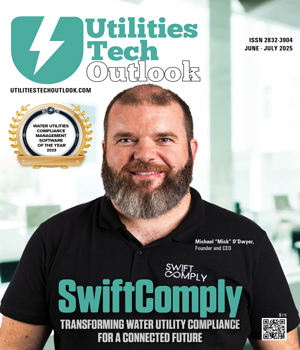
Water utilities have a tough job. They’re juggling expanding regulations, aging infrastructure, limited resources, and high expectations from both regulators and the communities they serve. While digital tools have made things easier, simply moving from paper to a screen isn’t enough. “I’ve sat where they sit—trying to run a compliance program with paper forms and duct tape systems,” says Michael “Mick” O’Dwyer, former wastewater engineer and founder of SwiftComply. “That’s why we built SwiftComply.” That’s where SwiftComply comes in. Founded by O’Dwyer, SwiftComply isn’t just about digitizing compliance programs—it’s about transforming how they work altogether. The company strengthens the connection between water utilities and the stakeholders who must comply, helping them collaborate more effectively to achieve shared goals. Whether it’s managing fats, oils, and grease (FOG) programs, backflow prevention, or industrial pretreatment, SwiftComply helps utilities cut through red tape, streamline processes, and work together more efficiently. “With over 400 utility partners across North America, we’re proving that compliance management doesn’t have to be a headache,” says O’Dwyer, founder and CEO. Tackling the Biggest Compliance Challenges With deep industry expertise and an entrepreneurial spirit, O’Dwyer has seen firsthand how many utilities remain locked into time consuming, paper heavy processes. “Some teams were spending more than 80 hours a week just processing backflow test reports—leaving little room for strategic work. Beyond the sheer inefficiency, those outdated systems made it harder for businesses and service providers to stay on top of compliance,” he explains.
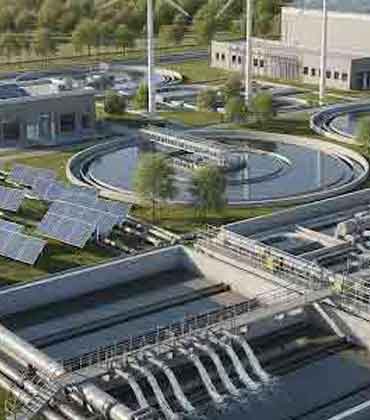
For years, per- and polyfluoroalkyl substances—better known as PFAS or ‘forever chemicals’—have posed one of the most persistent environmental challenges of our time. Resistant to natural degradation, these synthetic compounds have infiltrated global water systems, eluding most conventional treatment technologies and raising serious public health concerns. Studies have linked PFAS exposure to immune system suppression, developmental issues, and an increased risk of certain cancers. Despite mounting awareness, meaningful progress in eliminating PFAS has remained elusive. Existing remediation methods have often proven too costly, inefficient, or incapable of fully destroying the chemical bonds that make PFAS so enduring. Enter DMAX Plasma—a company taking a radically different approach. Leveraging advanced plasma-based technology, DMAX has engineered a solution that not only targets PFAS at the molecular level but eradicates them entirely. The process achieves this with unprecedented speed, energy efficiency, and environmental responsibility, setting a new benchmark in the fight against one of the most stubborn classes of pollutants. Turning PFAS into History The foundation of DMAX Plasma’s breakthrough technology was laid at Clarkson University, where environmental engineer Dr. Thomas Holsen and plasma chemical engineer Dr. Selma Mededovic Thagard set out to tackle one of the most complex challenges in water treatment. Backed by funding from the Environmental Protection Agency (EPA) and several leading water authorities, their research revealed the untapped potential of plasma chemistry to dismantle PFAS at the molecular level. What began as a scientific inquiry quickly matured into a disruptive solution with far-reaching implications for environmental remediation. Central to DMAX Plasma’s innovation is a low-energy, high-voltage plasma system engineered for both scalability and real-world application. Starting from a standard 240-volt line, the system efficiently amplifies power to 30 kilovolts of direct current. Argon gas is then introduced to generate microbubbles within contaminated water, drawing PFAS molecules to the surface—where they are destroyed by targeted plasma reactions. Unlike conventional treatment methods that depend on filtration or chemical processes and often leave behind toxic waste, DMAX Plasma’s system achieves total degradation without producing harmful byproducts. It performs reliably even in complex conditions with multiple contaminants, offering industries a practical and sustainable alternative.

Wastewater Treatment

Cannon Lord, Manager, Data Engineering, Summit Utilities
Gas Control
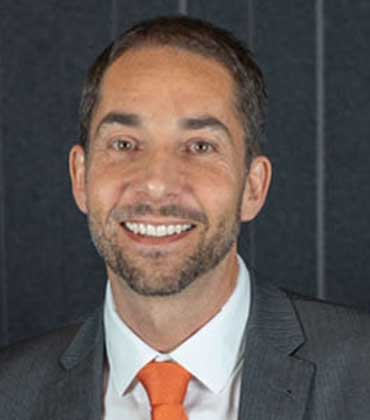
Cedric Brehaut, Senior Vice President, Product, Stem, Inc
Wastewater Treatment

Julian Kaufmann, Executive Vice President, CAMS
Gas Control

Sheila Mendez, Vice President and Chief Information Officer, TXNM Energy, Inc
Gas Control

Raied Stanley, Vice President, Chief Information Officer, Southwest Gas Corporation
Compliance

Sophie James, Vice President, Water Quality & Environmental Affairs, California Water Service
Compliance

By Taryn E. Williams ,director of corporate communications ,Talen Energy

Wastewater Treatment
Alberto Ruocco, Senior Vice President and Chief Information Officer, Alliant Energy

Wastewater Treatment
Roderick Conwell, Director, Transmission & Distribution Engineering, The AES Corporation
The water utility sector is vital in public health, environmental sustainability, and economic development.
Navigating the Changing Utility Space with Advanced Technologies
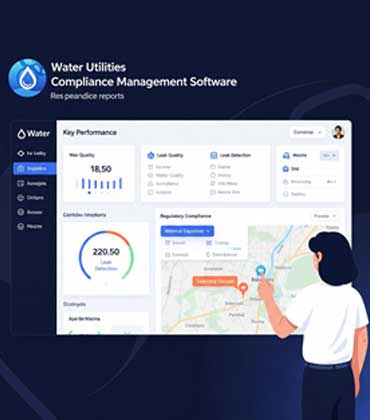
A growing number of water utilities are finding that manual compliance processes are no match for the complexity of today’s oversight requirements. The risk of missing key deadlines or reporting incomplete data has led numerous departments to seek software designed for compliance management. These systems go beyond basic digitization. They give utility managers a structured and coordinated way to manage inspections, lab data and internal reporting workflows. By organizing critical compliance information in one place, utilities are better equipped to stay ahead of regulatory changes and avoid disruptions tied to errors or missing documentation.
How water is treated and reused is also an important area of discussion, with more departments actively investing in sustainable systems that rely on fewer chemicals, recover more resources and place less strain on surrounding ecosystems. Whether through decentralized systems or improved filtration and monitoring, these efforts reflect a larger shift toward sustainability grounded in practical outcomes rather than distant targets.
Compliance management and treatment efficiency improvements are starting to make a real difference in how utilities operate. With better systems in place, teams are processing tasks with fewer delays. The goal is to make everyday work more manageable, reduce disruptions and improve service quality steadily over time.
In this edition of Utilities Tech Outlook, we explore the recent developments in water utilities’ compliance management software and sustainable water treatment solutions, which are helping strengthen performance, reduce inefficiencies and respond effectively to evolving demands.
We hope this edition of Utilities Tech Outlook helps you find the right partner for your business requirements.
Let us know your thoughts!