
Utilities Tech Outlook Weekly Brief
Be first to read the latest tech news, Industry Leader's Insights, and CIO interviews of medium and large enterprises exclusively from Utilities Tech Outlook
Pamela Sporborg is Director of Transmission and Market Strategy at Portland General Electric (PGE). She began her career as a Presidential Management Fellow at the Bonneville Power Administration, where she advanced demand response research with Lawrence Berkeley National Lab and later served at FERC. At PGE, she played a pivotal role in the company’s entry into the Western Energy Imbalance Market, fostering collaboration across utilities and serving in leadership roles on the Regional Issues Forum and Pathways Launch Committee. Governance Innovation for Public Interest The West Wide Governance Pathways Step 2 proposal (or SB 540 in the California Legislature) centers on the public interest as the primary focus for a fully independent Western energy market. Key provisions in the proposal include an expansion of the industry sectors to include consumer advocates, large load customers, and distributed energy suppliers. The proposal also includes the establishment of an Office of Public Participation at the Regional Organization and an independent consumer advocate organization. These innovations are intended to ensure that all interested parties, not just incumbents, have a strong voice in the evolution of the regional market. PGE’s Partnership Approach to Transmission PGE is continuing with a partnership-based approach to transmission development in the West. PGE is currently a joint owner of the California-Oregon Intertie that enables the exchange of solar and hydro energy between the Pacific Northwest and California, and the Colstrip Transmission System that provides access to some of the best wind energy in the WECC. These investments have provided benefits to PGE’s customers for over 30 years. We are continuing this approach with a partnership with the Warm Spring Tribe to expand the transmission line from central Oregon to the Willamette Valley, providing access to more solar resources, and as an anchor investor in the North Plains Connect
What operational gaps create confusion and delays in many government payment processing systems? At 11:59 PM, Richard is trying to pay his utility bill. The office is closed. The online portal is still open, but with a disclaimer: payments may take one to two business days to process. He goes ahead anyway because the alternative is a late fee or, worse, a service disruption. The confirmation screen says the payment is complete, but the next day, the account still shows as overdue. From Richard’s perspective, the system has failed. From the system’s perspective, everything is working as designed. This disconnect is built into how many government payments still operate today. Transactions are authorized in seconds, but settlement, posting, and reconciliation can take hours or days, moving across fragmented systems that do not always reflect the same reality at the same time. When something breaks, it is not always clear where, or who, is responsible. For citizens like Richard, that gap can mean late fees, penalties, service interruptions, and even an impact on credit standing. For agencies, it creates a constant burden of tracking, reconciling, and resolving transactions after the fact, often under audit pressure and with limited resources. That work consumes a meaningful share of finance and customer service resources every week, time that could be spent serving constituents. This is where AllPaid steps in. A government payment processing platform, AllPaid is built around a different definition of completion, not when a transaction is authorized, but when it is fully delivered, posted, reconciled, and accounted for, without ambiguity on either side. For someone like Richard, that means the difference between a payment that appears complete and one that is. For agencies, it removes the need to trace, verify, and reconcile transactions after the fact. Instead of stopping at authorization, AllPaid carries each transaction through to its final state, ensuring it is not just processed, but finished. It is a philosophy rooted in something less visible than speed or interface design, but far more consequential: accountability. For nearly three decades, AllPaid has served as the operational backbone behind essential government payments, today supporting more than 3,500 agencies across the country. The platform powers the payments citizens rely on most, spanning utilities, courts, taxes, and more. Designed to remove complexity for agencies while ensuring every transaction is tracked from initiation to final posting, it brings together payment acceptance, real-time processing, automated reconciliation, and audit-ready reporting into a single, integrated system. Behind every transaction is a system, and a team, built to guarantee that funds arrive where they should, when they should, with the level of certainty public institutions and their communities depend on. This track record has earned AllPaid recognition as the Utility and Sewer Payments Platform of the Year. “There was a time when agencies were chasing the ‘cool,’ new features, lower costs, and shiny technology,” says Geoff Knapp, CEO. “What we’re seeing now is a shift back to what really matters: a partner they can rely on and a solution that simply works, and that’s us.” How does AllPaid extend payment processing beyond simple transaction authorization and acceptance workflows? Redefining What It Means to Complete a Payment What sets AllPaid apart is how it operationalizes success. In much of the payments industry, a transaction is considered complete once it is authorized. For AllPaid, that is only the beginning. A payment is not finished until it has reached the agency, been accurately posted, and is fully accounted for in a way that stands up to audit. This end-to-end accountability shapes how the company designs its technology, structures its operations, and supports its clients. AllPaid approaches modernization differently. Rather than introducing additional layers of technology, the company focuses on simplifying the experience for its clients. This includes handling the heavy lifting behind the scenes, from transaction reporting to reconciliation, so agencies can operate with greater clarity and confidence. That approach is designed to be as turnkey as possible with most agencies live in less than 30 days. This philosophy extends to how AllPaid integrates with existing systems. By strengthening its integration capabilities and expanding API-driven connectivity, the platform enables real-time access to payment-related data, allowing information to be automatically retrieved, updated, and reflected across systems. The result is a more seamless experience for both users and back-office teams, with fewer manual steps and greater accuracy throughout the process.

Transmission and Distribution

Rodica Donaldson, Vice President Transmission Analytics & Interconnection, EDF power solutions North America
Wastewater Treatment
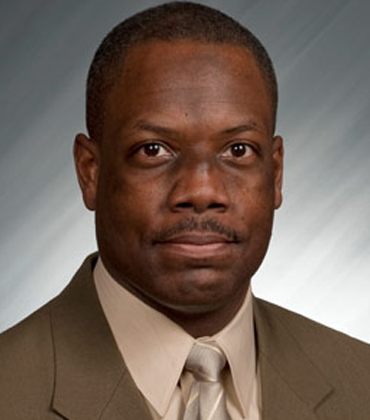
Roderick Conwell, Director, Transmission & Distribution Engineering, The AES Corporation
Wastewater Treatment
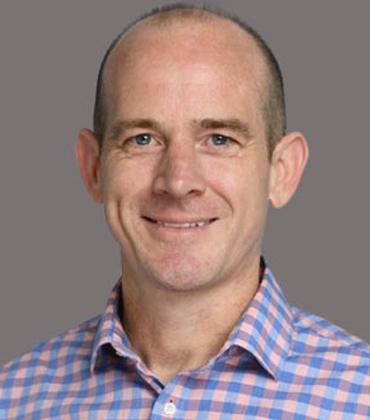
Sean Eade, Practice Lead Integration and Emerging Technology, TRC Companies, Inc.
Wastewater Treatment

Maureen McDonald, Director of Energy Services, Southland Industries and Roxanne Fong, Director of Utility Programs, Southland Industries
Transmission and Distribution

Lora Anguay, Chief Energy Resources Officer, SMUD

Wastewater Treatment
Walter Alvarado, Vice President, Electric Transmission, Con Edison Transmission, Inc.
Startups
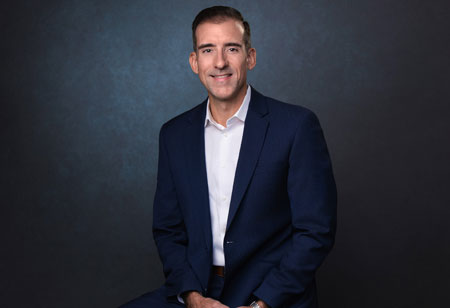
Timothy Rozic, Engineering Manager, PSB Industries
Pole line hardware guarantees network reliability, improves safety, and minimizes maintenance requirements.

Utility Asset Management enhances sustainability, boosts safety, and lowers operational expenses.
Powering the Next Era of Utility Operations
AllPaid is named Utility and Sewer Payments Platform of the Year in 2026. The recognition highlights the growing role modern payment systems play in utility operations. AllPaid’s platform is designed to ensure payments are processed accurately from start to finish. Payments are matched with records, reconciled and prepared for audits. The company works with more than 3,500 government agencies across the country and has helped utilities reduce the manual work involved in payment reconciliation while improving transparency and customer experience. AllPaid combines real-time payment processing, API-based system integration and 24/7 human support to help utilities manage payments more reliably. Its approach focuses on dependable execution and operational efficiency rather than unnecessary complexity.
This edition also highlights organizations working on grid modernization, energy integration and infrastructure resilience. As utilities work to reduce emissions and maintain reliable operations, many are investing in technologies that support data-driven decisionmaking, operational flexibility and improved customer engagement.
Walter Alvarado, Vice President, System & Transmission Operation at Con Edison, discusses how transmission modernization, energy integration and electric vehicle infrastructure are changing utility operations. He also shares why continued investment in infrastructure is important while balancing long-term environmental responsibility as energy demand continues to grow.
The utility sector is changing fast. Companies are focusing on doing things efficiently updating their infrastructure and using technology in a practical way to make things more reliable and efficient. People like Alvarado are leading the way through this change. We invite you to check out this issue and find out more about the companies and leaders that are shaping the future of utilities.
![PORTLAND GENERAL ELECTRIC [NYSE: POR]: Uilding Equitable Pathways In Western Energy](https://www.utilitiestechoutlook.com/newstransfer/upload/1-5yyxw-.jpg "PORTLAND GENERAL ELECTRIC [NYSE: POR]: Uilding Equitable Pathways In Western Energy")
